Cross-Border LTL Shipping Between Canada and the U.S.: What Shippers Need to Know
Moving freight between Canada and the United States is a routine part of North American business, but that does not mean every shipment is simple.
For companies moving several pallets at a time, cross-border LTL shipping can provide a practical alternative to paying for an entire trailer. The challenge is that moving less-than-truckload freight across an international border introduces more coordination than a typical domestic shipment.
At Wood-Hall Logistics, we regularly help customers move LTL and truckload freight between Canada and the U.S. The key is understanding what the shipment actually needs and building the transportation plan around it.
What Is Cross-Border LTL Shipping?
Less-than-truckload, or LTL, shipping allows multiple customers’ freight to share trailer capacity.
Instead of paying for a full truck, a shipper typically pays for the space and service required for their portion of the load.For cross-border freight, that can be especially useful for businesses moving:
• Several pallets or skids at a time
• Recurring shipments to customers or distributors
• Freight that is too large for parcel networks
• Shipments that do not require dedicated truckload capacity
A manufacturer shipping several pallets from Canada into the U.S. every week, for example, may be a good candidate for LTL.
That does not mean LTL is always the right answer. As shipment size, weight, service requirements, or urgency increase, a full truckload solution may become more efficient.
Why Cross-Border LTL Can Be More Complicated
Domestic LTL already involves multiple moving parts. Cross-border freight adds another layer.
Depending on the lane and carrier network, freight may move through terminals, transfer between equipment, or be consolidated with other shipments before reaching its destination.
At the same time, the shipment must be coordinated around border requirements.
Common considerations include:
• Customs documentation
• Customs broker coordination
• Pickup and delivery appointments
• Border processing
• Carrier coverage on both sides of the border
• Freight dimensions and weight
• Special equipment or handling requirements
• Realistic transit expectations
The transportation provider, customs broker, shipper, receiver, and carrier all need the correct information at the right time.
This is why seemingly straightforward cross-border LTL freight can become difficult when communication or planning breaks down.
Consistency Matters for Recurring LTL Freight
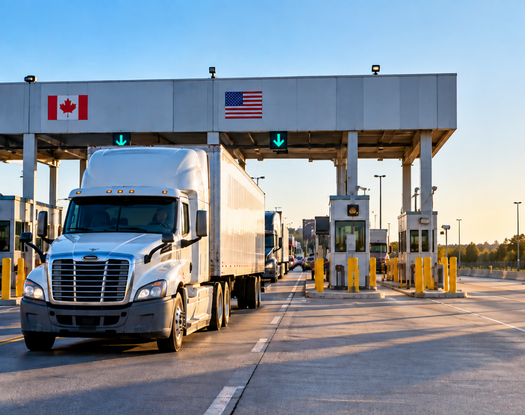
Cross-border LTL becomes particularly important for businesses that move similar freight repeatedly.
Consider a company shipping several skids into the U.S. every week.
Finding a carrier for one shipment may not be difficult. The bigger challenge is creating a solution that continues to work week after week.
Service consistency can depend on carrier coverage, terminal networks, capacity, freight characteristics, destination requirements, and lane balance.
Wood-Hall approaches recurring cross-border LTL by looking beyond a single rate. We consider how the lane operates over time and whether the transportation plan can reliably support the customer’s ongoing requirements.
When a Standard LTL Solution Is Not Enough
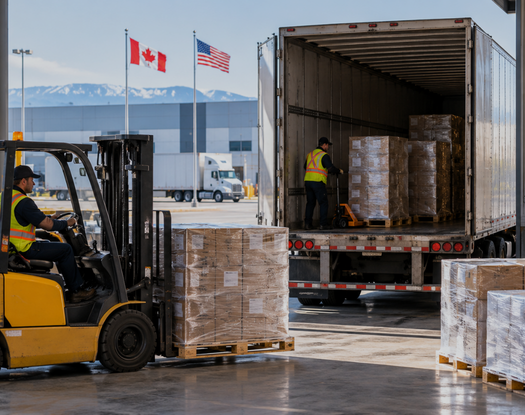
Not every shipment fits neatly into a standard LTL network.
A difficult destination, unusual freight dimensions, tight delivery window, limited dock access, or inconsistent carrier coverage can all change the equation.
In those situations, the answer may involve more than simply finding another LTL carrier.
Depending on the shipment, Wood-Hall may evaluate options such as:
• Consolidation
• Cross-docking
• Regional carrier connections
• Straight trucks or other equipment
• Different routing
• Full truckload service
The objective is not to force the shipment into a particular service category.
It is to determine the most practical way to move the freight.
That problem-solving approach is especially valuable on cross-border lanes where a standard carrier solution has already produced inconsistent results.
How Do You Know When LTL or Truckload Makes More Sense?
There is no single pallet count where LTL automatically becomes truckload.
Several factors can affect the decision:
• Number of pallets
• Shipment weight
• Freight dimensions
• Origin and destination
• Transit requirements
• Handling sensitivity
• Frequency of shipments
• Availability and pricing on the lane
For smaller palletized shipments, LTL may offer significant efficiency because the shipper is not paying for unused trailer capacity.
For larger shipments, dedicated truckload capacity may provide better economics, reduced handling, or a more direct transit plan.
An experienced freight partner should be able to evaluate both rather than steering every shipment toward the same solution.
Cross-Border Truck Freight Remains a Major Part of Canada-U.S. Trade
The scale of Canada-U.S. truck freight reinforces why dependable cross-border transportation matters.
According to the U.S. Bureau of Transportation Statistics, US$35.9 billion in freight moved by truck between Canada and the United States in June 2026¹.
Commercial truck traffic also remains relatively steady throughout the year compared with more seasonal passenger border activity, reflecting the ongoing importance of cross-border supply chains.
For shippers, that means cross-border transportation is not an occasional specialty service. For many businesses, it is part of everyday operations.
The Right Solution Starts with the Freight
Good cross-border LTL planning starts with understanding the shipment.
Where is it coming from? Where is it going? How much freight is moving? How often? Does the receiver have special requirements? Is transit time flexible, or is the delivery time critical?
At Wood-Hall Logistics, we support LTL, full truckload, cross-border freight, consolidation, cross-docking, and specialized transportation across Canada and the United States. Wood-Hall already provides LTL service across Canada and into the U.S., alongside truckload and specialized transportation options.
The goal is simple: build the transportation solution around what the shipment actually requires.
Have a Cross-Border Lane That Could Work Better?
If you are moving recurring palletized freight between Canada and the U.S., or dealing with a cross-border lane that has been difficult to service consistently, Wood-Hall Logistics can help review the options.
Tell us what you need to move, and we’ll help you build the right plan.
¹Source: U.S. Bureau of Transportation Statistics, North American TransborderFreight Data, June 2026.
https://www.bts.gov/newsroom/north-american-transborder-freight-increased-199-june-2026-june-2025
Planning an Upcoming Shipment?
Need help determining a realistic transit time or the right transportation solution?
Connect with Wood-Hall Logistics to discuss your next shipment or request a quote.
About Us
Wood-Hall Logistics is a full-service logistics and freight management company, offering a range of transportation solutions, based on the customer's specific needs. Built on our reputation within the transportation industry and our network of quality carriers, Wood-Hall Logistics ensures that all shipments are handled with utmost care. Ship with us today!

Main Menu
Contact US
280 Woolwich Street S, Unit 206
Breslau, Ontario N0B 1M0
Hours of Operations
Available 24/7
Monday - Friday
7 am - 6 pm
Shipping Hours:
8 am - 4 pm