
Shipping Freight to Atlantic Canada: Building Better Connections to the East Coast
Atlantic Canada is an important market for businesses across Canada and key U.S. markets, but moving freight into the region is not always straightforward.
Longer distances, fewer transportation options on certain lanes, changing freight volumes, and the need for reliable regional coverage can make East Coast shipping more challenging than the mileage alone might suggest.
At Wood-Hall Logistics, we have been strengthening our network and freight solutions for Halifax, Moncton, and the broader Atlantic Canada region to give customers more dependable options for LTL, full truckload, and more complex freight requirements.
Why Atlantic Canada Matters
Atlantic Canada plays an important role in both domestic distribution and international trade.
Ports across Atlantic Canada collectively handle millions of tonnes of cargo each year, with a significant share of imported goods entering through East Coast gateways before being distributed inland. Halifax in particular functions as a key transshipment hub, connecting Canadian supply chains to more than 150 countries and supporting the movement of freight between Atlantic Canada, Central Canada, and global markets.
More broadly, Canadian freight patterns continue to evolve. Transport Canada reported that changing trade flows in 2025 increased reliance on marine gateways and longer-haul domestic transportation connections, placing greater importance on coordination between regions and transportation modes.
For shippers, this means Atlantic Canada should not be viewed as an isolated end market. It is part of a broader supply chain connecting manufacturers, distributors, retailers, ports, and customers across Canada.

The Challenge of East Coast Freight
One of the realities of shipping into Atlantic Canada is that not every lane offers the same level of capacity, frequency, or flexibility.
For businesses with recurring shipments, inconsistent volumes, or freight that does not require a full trailer, finding dependable LTL service can become particularly important.
The challenge is not simply finding a carrier. It is creating a freight plan that keeps service, timing, communication, and cost aligned.
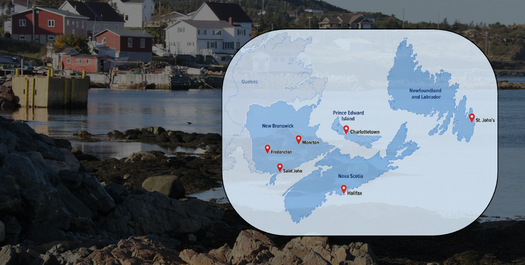
At Wood-Hall, we have focused on developing stronger support between Ontario, Quebec, Halifax, Moncton, and other Atlantic Canada destinations, including:
• Halifax
• Moncton
• Saint John
• Fredericton
• Charlottetown
• St. John’s
• Surrounding regional markets
Our goal is to provide customers with one responsive logistics partner that can help coordinate freight across these lanes as requirements change.
LTL, Truckload, and Flexible Freight Solutions
Different shipments require different approaches.
For larger volumes or freight requiring more direct service, full truckload transportation may provide the best solution.
For smaller or recurring shipments, LTL freight provides greater flexibility without requiring customers to fill an entire trailer.
Some shipments may also require additional support such as cross-docking, short-term warehousing, consolidation, or coordinated onward transportation.
That flexibility becomes particularly valuable when freight volumes fluctuate or a shipment needs to connect with another destination, mode, or transportation provider.
Wood-Hall approaches each requirement based on the freight, the lane, and the delivery expectations rather than forcing every shipment into the same transportation model.
Halifax and Moncton as Key Freight Hubs
Halifax and Moncton are two of the primary markets within our Atlantic Canada strategy.
Halifax provides access to a major regional population centre and international gateway, while Moncton serves as an important distribution point for New Brunswick and the broader Maritime region.
The Port of Halifax also highlights its rail and highway connectivity to Central Canada and the U.S. Midwest, demonstrating how interconnected Atlantic freight is with inland supply chains.
For customers, stronger access to these hubs can create opportunities to build more consistent freight programs across the East Coast rather than treating each shipment as an isolated move.
Better Freight Starts With Better Coordination
Shipping into Atlantic Canada takes more than booking a truck.
It requires realistic planning, reliable capacity, clear communication, and the ability to respond when freight requirements change.
That is where Wood-Hall Logistics brings value.
Our team works with customers to understand the complete shipment requirement, identify practical transportation options, and coordinate freight from quote through delivery.
Whether you are moving recurring LTL freight, full truckloads, or trying to solve a difficult East Coast lane, our objective is simple: make Atlantic Canada easier to reach.
Shipping Into Atlantic Canada?
Wood-Hall Logistics provides freight support between Ontario, Quebec, Halifax, Moncton, and destinations throughout Atlantic Canada.
Learn more about our Atlantic Canada freight solutions and review your lanes with our team.
Planning an Upcoming Shipment?
Need help determining a realistic transit time or the right transportation solution?
Connect with Wood-Hall Logistics to discuss your next shipment or request a quote.
About Us
Wood-Hall Logistics is a full-service logistics and freight management company, offering a range of transportation solutions, based on the customer's specific needs. Built on our reputation within the transportation industry and our network of quality carriers, Wood-Hall Logistics ensures that all shipments are handled with utmost care. Ship with us today!

Main Menu
Contact US
280 Woolwich Street S, Unit 206
Breslau, Ontario N0B 1M0
Hours of Operations
Available 24/7
Monday - Friday
7 am - 6 pm
Shipping Hours:
8 am - 4 pm